LeBron Leads Lakers Past Celtics in Epic Game 5 Showdown
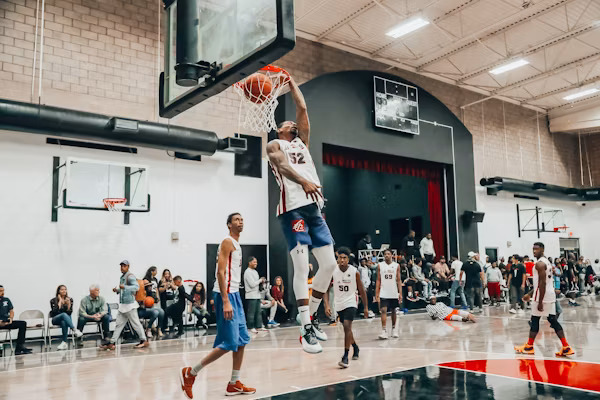
In a legendary Game 5 that will be talked about for decades, LeBron James defied Father Time once again. Scoring 42 points, pulling down 11 rebounds, and handing out 9 assists, the Lakers' superstar spearheaded a remarkable fourth-quarter comeback to seal a crucial victory over the Boston Celtics. The win gives the Lakers a commanding advantage as the postseason series reaches its absolute climax. The energy inside the arena was electric, with every possession carrying the weight of championship expectations.
From the opening tip, the intensity was palpable in TD Garden. Facing a hostile crowd and a relentless Celtics defense led by Jrue Holiday, LeBron James set the tone early by attacking the rim and drawing contact, establishing an aggressive physical presence that forced the Celtics into early foul trouble. His ability to read the defense in real-time allowed the Lakers to exploit mismatches, consistently hunting smaller defenders on switches and orchestrating the half-court offense with surgical precision.
The game was a tactical chess match. Boston's suffocating double-teams initially forced James into early turnovers, but Lakers head coach adjusted by running high pick-and-roll schemes that isolated Celtics guards. In the final five minutes of the fourth quarter, LeBron scored 14 straight points, including three consecutive step-back triples over Jayson Tatum. Defensively, Anthony Davis anchored the paint with 5 blocks, preventing Boston from getting easy transition buckets. Look for Boston to adjust their perimeter rotation heading into the next game, but the momentum has firmly shifted to Los Angeles.
Statistically, LeBron's efficiency was staggering. He shot 15-of-24 from the field, including 5-of-8 from beyond the arc, translating to a True Shooting Percentage (TS%) of 74.8% for the night. Advanced tracking data showed that James walked or jogged for 68% of the game, conserving his energy for explosive bursts in transition and isolating defenders in the mid-post during crucial late-game possessions. The Lakers' supporting cast also stepped up, with Austin Reaves contributing 18 points and key playmaking that relieved pressure off LeBron.
MVP Race 2026: Who Has the Edge Heading Into the Finals?
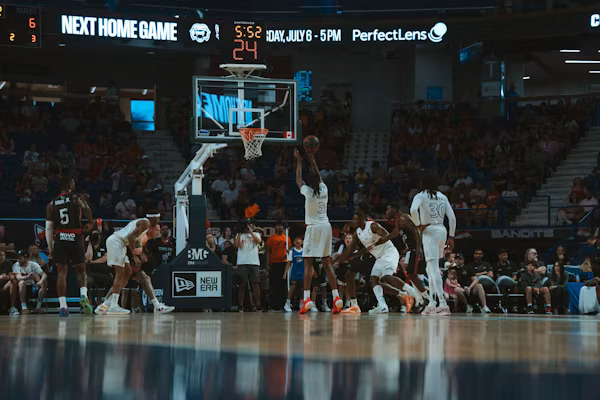
The race for the 2026 NBA Most Valuable Player award is one of the closest in modern league history. Three superstars are separated by a razor-thin margin as voters finalize their ballots. Let's look at the advanced numbers and cases for each of the frontrunners.
| Candidate | PPG | APG | RPG | PER | Team Seed |
|---|---|---|---|---|---|
| Luka Dončić (DAL) | 33.4 | 9.8 | 8.9 | 31.2 | 2nd West |
| Nikola Jokić (DEN) | 26.1 | 10.2 | 12.4 | 30.8 | 3rd West |
| Jayson Tatum (BOS) | 28.9 | 5.8 | 8.2 | 27.5 | 1st East |
As the regular season winds down, the MVP race has transformed from a general consensus into an intense three-way philosophical debate. Different voters value different criteria: pure scoring dominance, advanced efficiency metrics, or leading the winningest team in the league. This season's candidates have pushed the envelope of what is statistically possible, making this ballot one of the most polarizing in recent memory.
Dončić leads the league in raw scoring and offensive usage rating, carrying Dallas through a heavily injured stretch. His case is bolstered by his performance against top-tier opponents, where his clutch-time scoring has repeatedly rescued the Mavericks from late-game deficits. Critics point to his high usage rate, but proponents argue that without his historic workload, Dallas would not even be in the playoff picture. His step-back jumper has become virtually unguardable, forcing defenses to send immediate double-teams.
Meanwhile, Jokić continues his historic efficiency, virtually leading the NBA in advanced tracking stats such as Box Plus-Minus and Win Shares. His ability to orchestrate the Nuggets' offense from the high post makes him a constant threat, and his defensive tracking metrics have shown significant improvement under the team's drop-coverage scheme. He leads the league in Win Shares and Player Efficiency Rating (PER), making him the choice for voters who prioritize analytical efficiency.
Jayson Tatum's case is built on dominant wing play and leading the Celtics to a league-best 62-win record. Whichever way the voters lean, the result will set the narrative for the championship finals. Tatum has sacrificed individual stat-padding for team flow, sharing the load with an elite supporting cast. His two-way impact, switching seamlessly from guard to forward on defense, gives Boston their identity. The final stretch of games will decide who claims the coveted trophy.
Summer Trade Board: 5 Blockbuster Moves That Could Reshape the League

Front offices are already working the phones as the draft approaches. Insiders report that several franchises are looking to move marquee assets to either rebuild or push their rosters into immediate contention. The modern NBA trade market is heavily influenced by the restrictive second-apron rules of the Collective Bargaining Agreement (CBA). Front offices must balance win-now desires against long-term financial penalties. This has led to creative multi-team proposals as general managers seek to restructure their salary books while remaining competitive.
1. The Guard to Miami Scheme
Miami is rumored to be offering a package of two future first-round picks and two young wing players to secure an All-Star ball-handler. This would bolster their offensive half-court creation.
Jimmy Butler taking on more of a secondary scoring role as he manages his mileage makes securing an elite pick-and-roll ball-handler who can break down defenses off the dribble Miami's top priority. The Heat are prepared to offer a package centered around draft capital and young player assets, hoping to entice a rebuilding team in possession of a disgruntled star.
2. Frontcourt Shakeup in Golden State
The Warriors are searching for size to maximize the remaining window of their core shooters. Scout reports indicate discussions around a defensive-minded center from the Eastern Conference.
Recognizing their lack of interior size and rim protection during their last playoff exit, the Warriors are active in discussions for a physical defensive center. By adding a rim-runner who can roll hard out of Curry's double-teams, the Warriors hope to open up perimeter spaces for their elite shooters while shoring up a defense that ranked middle-of-the-pack in paint points allowed.
3. Knicks Target Perimeter Depth
New York's aggressive front office has identified a sharpshooting veteran wing to aid spacing for Jalen Brunson. Trade packages likely revolve around salary-matching veterans and draft capital.
Their target is an elite floor-spacer—a high-volume catch-and-shoot threat who can prevent defenses from collapsing on Jalen Brunson. By acquiring a premier wing shooter, New York hopes to optimize their half-court spacing, creating a more balanced attack that can withstand the physical grinding of postseason play.
These rumored transactions reflect the league's shifting meta. The value of versatile two-way wings and mobile, rim-protecting bigs has never been higher, forcing general managers to make bold maneuvers. With salary cap space at a premium, look for teams to heavily utilize exceptions like the Mid-Level Exception (MLE) and trade player contracts that offer team options or non-guarantees to balance the scales.
Rookie of the Year: The Case for 3 First-Year Stars

This year's rookie class has far exceeded expectations, with three distinct first-year players putting up historic statistics. Unlike previous seasons dominated by one clear candidate, the 2025-26 Rookie of the Year debate centers on the balance between team success, individual statistics, and long-term potential. Adjusting to the relentless 82-game NBA schedule is notoriously difficult for rookies, who often hit a physical wall midway through the season. This year's top three candidates, however, have shown a level of physical conditioning and mental maturity that has stunned veterans and front office executives alike. Each has carved out a distinct identity, contributing to winning basketball from day one.
The Scorer
Averaging 21.4 PPG with elite shot-creation and perimeter handles that have immediately made him his team's top option. Operating as the focal point of his team's offensive game plan, this prospect is already drawing double-teams. His ability to create separation off the bounce, navigate mid-range pull-ups, and finish around elite shot-blockers has drawn comparisons to early-career scoring champions.
The Playmaker
Leading all rookies with 8.4 APG. Shows generational passing vision and transition speed, transforming his team's pace of play. With a passing style that blends flare with surgical precision, he has turned his team into a fast-break juggernaut. His elite court vision allows him to throw cross-court skip passes directly into the shooting pockets of teammates, making him a constant threat in transition.
The Defender
Averaging 2.4 blocks and 1.2 steals. Anchors a top-10 defense, showing incredible defensive versatility on switches. Standing as a premier rim-protector, he has transformed his team's defensive rating. His lateral quickness allows him to switch onto guards on the perimeter, neutralizing pick-and-roll actions before they can develop, while his anticipation skills make him a menace in passing lanes.
Coaches around the league have commented on the unprecedented maturity of this rookie group. The transition from college or international play to the high-tempo NBA schedule has historically taken years, but these three prospects have adapted within months, cementing themselves as franchise cornerstones. A major reason for this rookie class's immediate success is the advanced development programs they participated in before entering the league, whether in elite international leagues or specialized academy systems. This preparation has allowed them to step onto the court as complete players, ready to impact the league immediately.
NBA Finals Preview: Keys to the Series and Betting Angles

As the Eastern and Western Conference champions prepare to square off, our analysis team breaks down the three tactical keys that will decide the series, alongside key betting angles and player props.
Key Matchup 1: Three-Point Variance
Both teams rank in the top five in three-point attempts. The team that manages to hit above 38% on contested catch-and-shoot looks will command the floor spacing, opening lanes for drive-and-kick options.
Key Matchup 2: Paint and Rim Protection
With elite interior scorers on both sides, the battle of the bigs will be critical. Watch the fouls on the starting centers early in Game 1, as backup rotations could expose defensive vulnerabilities.
- Eastern Conference Champion-115
- Western Conference Champion-105
Top Fantasy NBA Waiver Wire Adds for the Playoff Push
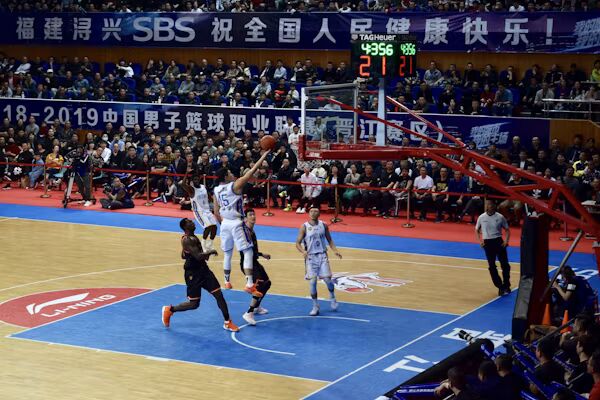
Late-season injuries and load management have created a chaotic waiver wire landscape. If you're fighting in the fantasy playoffs, these five players are must-adds immediately to secure your championship trophy. In the fantasy basketball postseason, every category counts. Standard draft strategies fly out the window as managers focus on maximizing game volume and targeting players who benefit from late-season rotations. Understanding which teams have favorable schedules and which players are poised for expanded roles is key to winning your league.
Make sure to check the weekly NBA schedule breakdown. Teams playing four games in five nights offer the highest cumulative volume, giving you a distinct statistical advantage in head-to-head categories. To maximize your weekly matchups, look at the schedule grid. Streaming players from teams with four games in a week, particularly those playing on 'light days' (Tuesdays and Thursdays), allows you to maximize active roster spots and out-volume your opponent. Do not hesitate to drop underperforming players to secure these high-value streaming options.